Packing for a 7-day trip doesn’t require a giant suitcase, it requires a smarter system. The simplest rule is this: build a small, mix-and-match wardrobe, pack only toiletries you actually use daily, and limit tech to essentials. When you commit to one carry-on plus a personal item, you naturally eliminate “just in case” clutter and travel lighter, faster, and with less stress. This guide shows you how to do exactly that, without feeling underprepared.
Expectation check: This packing strategy is designed for 7 days, one carry-on, one personal item. No checked bags. No overthinking. Just intentional packing that works.
Step 1: Decide Your Luggage
Why bag size determines everything
Your bag is the boundary. A smaller bag forces better decisions, about clothing, shoes, and what truly matters. When space is limited, overpacking becomes physically impossible, which is exactly the point.
Ideal carry-on size for a 7-day trip
A 35–40L carry-on is the sweet spot for a week-long trip. It’s large enough for a full outfit rotation when packed efficiently, yet small enough to keep you disciplined. This size fits most airline cabin rules and encourages a streamlined packing list.
Backpack vs suitcase considerations
- Backpack: Better for mobility, stairs, uneven streets, and hands-free travel. Ideal if you’ll move often or rely on public transport.
- Suitcase: Easier organization, smoother rolling, and quicker access. Best for cities, hotels, and flatter terrain.
Choose the style that matches how you’ll travel, not what looks good in photos.
Why carry-on only prevents overpacking
Carry-on only travel eliminates the mental trap of “extra space.” No checked bag means:
- Fewer fees
- Faster airport exits
- No lost luggage anxiety
- Less temptation to pack duplicates
You pack what you need, not what you might need.
Key takeaway: Your bag is your first anti-overpacking decision. Choose a carry-on, and the rest of your packing list naturally falls into place.
Step 2: Core Clothing Formula (7 Days)
The goal isn’t fewer clothes, it’s better combinations. A tight clothing formula gives you flexibility without bulk, and it works across most destinations when you stick to versatile pieces.
Clothing Counts That Actually Work
Tops
- 4–5 casual tops (tees, tanks, or lightweight shirts) you can rotate daily
- 1–2 dressier tops for dinners, nights out, or photos
Choose breathable fabrics and neutral colors so everything pairs easily.
Bottoms
- 2–3 total (e.g., jeans or trousers + shorts or skirt)
Bottoms take more space, so fewer here unlock more room elsewhere.
Dresses / Rompers (optional)
- 1 versatile piece that can be dressed up or down
A single dress or jumpsuit can replace multiple outfits.
Outerwear
- 1 light jacket or sweater
If it’s cold, swap for one warmer layer instead of packing multiples.
Sleepwear
- 1 set that can double as lounge wear
Soft tees and shorts save space and feel practical.
Underwear
- 7 pairs for the week
- 2 bras if applicable (one regular, one versatile/sporty)
Socks
- 2–3 pairs, ideally quick-dry
Re-wear after airing out if needed.
Swimwear
- 1–2 swimsuits
- Optional: 1 lightweight cover-up if swimming is frequent.
Accessories
- Sunglasses
- Minimal jewelry or a watch
- 1–2 scarves or a thin shawl (warmth, style, modesty, or plane blanket)
Mix-and-Match Wardrobe Logic
Capsule concept
Think of your clothes as a small system, not individual outfits. Stick to one main color palette (neutrals + 1–2 accent colors) so everything works together.
Outfit multiplication
With 5 tops × 3 bottoms, you already have 15 outfit combinations, before adding layers or accessories. That’s more than enough for 7 days.
Climate considerations
Pack for the actual forecast, not worst-case scenarios. One adaptable layer beats three bulky backups. If the climate is extreme, swap pieces, not add extras.
Step 3: Shoes and Accessories (Big Space Savers)
Shoes are the fastest way to destroy a clean packing plan. Every extra pair competes directly with clothing space.
Smart Shoe Strategy
Ideal shoe limit
- 2–3 pairs max, no exceptions for a 7-day trip.
Which shoes earn their place
- 1 comfortable walking shoe (sneaker or supportive flat)
- 1 dressier shoe or sandal for evenings
- Optional: lightweight flip-flops for beach or shared showers
Wearing bulky items in transit
Always wear your heaviest shoes on travel days. It saves space and weight instantly.
Accessories That Pull Double Duty
Hats
- 1 hat only, sun protection or warmth, not both unless needed.
Packable bags
- 1 foldable tote or packable backpack for day trips, groceries, or beach days
This replaces extra purses or backpacks.
Minimal extras
Accessories should enhance multiple outfits, not create new ones. If it only works once, it doesn’t earn space.
Step 4: Toiletries and Personal Care
Toiletries are where most overpacking quietly happens. The fix is simple: travel-size only, daily-use only. If you don’t use it every day at home, it probably doesn’t need to come with you.
Travel-Size Essentials Only
Oral care
- Toothbrush
- Travel-size toothpaste
- Floss
That’s it, no backups, no bulky cases.
Hair care
- Small shampoo + conditioner or solid bars
- Compact comb or brush
Skip full-size bottles unless you’re checking a bag (you’re not).
Skin care
- Face wash
- Lightweight moisturizer
- Sunscreen
- Lip balm
Bring your basics, not your entire routine.
Body essentials
- Deodorant
- Small body wash only if needed (many accommodations provide soap)
Makeup (minimal kit)
- Tinted moisturizer or foundation
- Concealer
- One blush
- Mascara
- 1–2 lip colors
This covers day and night without a full makeup bag.
Health & medications
- All prescription meds (always in carry-on)
- Basic pain reliever
- A few bandages
- Daily-use items (contacts, solution, retainer)
Carry-On Liquid Rules
TSA-friendly packing
- All liquids under 100 ml / 3.4 oz
- Everything fits in one clear quart-size bag
- Place it at the top of your bag for easy access
What to skip entirely
- Full-size backups
- “What if” products
- Hair tools unless absolutely necessary
- Items easily bought at your destination
The rule: if it’s replaceable, don’t overpack it.
Step 5: Tech, Documents, and In-Flight Essentials
Your personal item is your safety net. Everything valuable, essential, or time-sensitive lives here, not in your main bag.
What Goes in Your Personal Item
Travel documents
- Passport or ID
- Boarding passes (digital or printed)
- Itinerary and confirmations
Money & insurance
- Wallet with cards
- Small amount of local currency
- Travel insurance details
Tech essentials
- Phone
- Charging cable
- Small power bank
- Universal adapter
- Optional: tablet or lightweight laptop only if you’ll actually use it
Comfort items
- Empty reusable water bottle
- Snacks
- Eye mask or earplugs
- Thin scarf or sweater for cold cabins
Backup essentials (delay protection)
- One change of underwear
- One spare outfit
If your main bag is delayed, you’re still covered.
What Not to Pack
Redundant gadgets
- Multiple cameras
- Extra chargers “just in case”
- Devices that duplicate your phone’s function
“Just in case” electronics
If you haven’t used it in the last week at home, it probably won’t get used on your trip. Tech adds weight fast, cut it aggressively.
Step 6: Proven Strategies to Avoid Overpacking
Overpacking isn’t about lack of space, it’s about lack of rules. These strategies create guardrails that keep your bag lean without sacrificing comfort.
Planning & Outfit Strategy
Packing lists as boundaries
Write a list, and treat it like a contract. Once an item isn’t on the list, it doesn’t get added later. This single habit eliminates last-minute “maybes.”
Color palette rules
Choose mostly neutrals (black, white, beige, navy) plus one or two accent colors. If every top matches every bottom, you multiply outfits without adding pieces.
Weather-based packing
Pack for the actual forecast, not worst-case scenarios. Check the weather 24–48 hours before departure and adjust, don’t hedge with extras.
Space & Organization Techniques
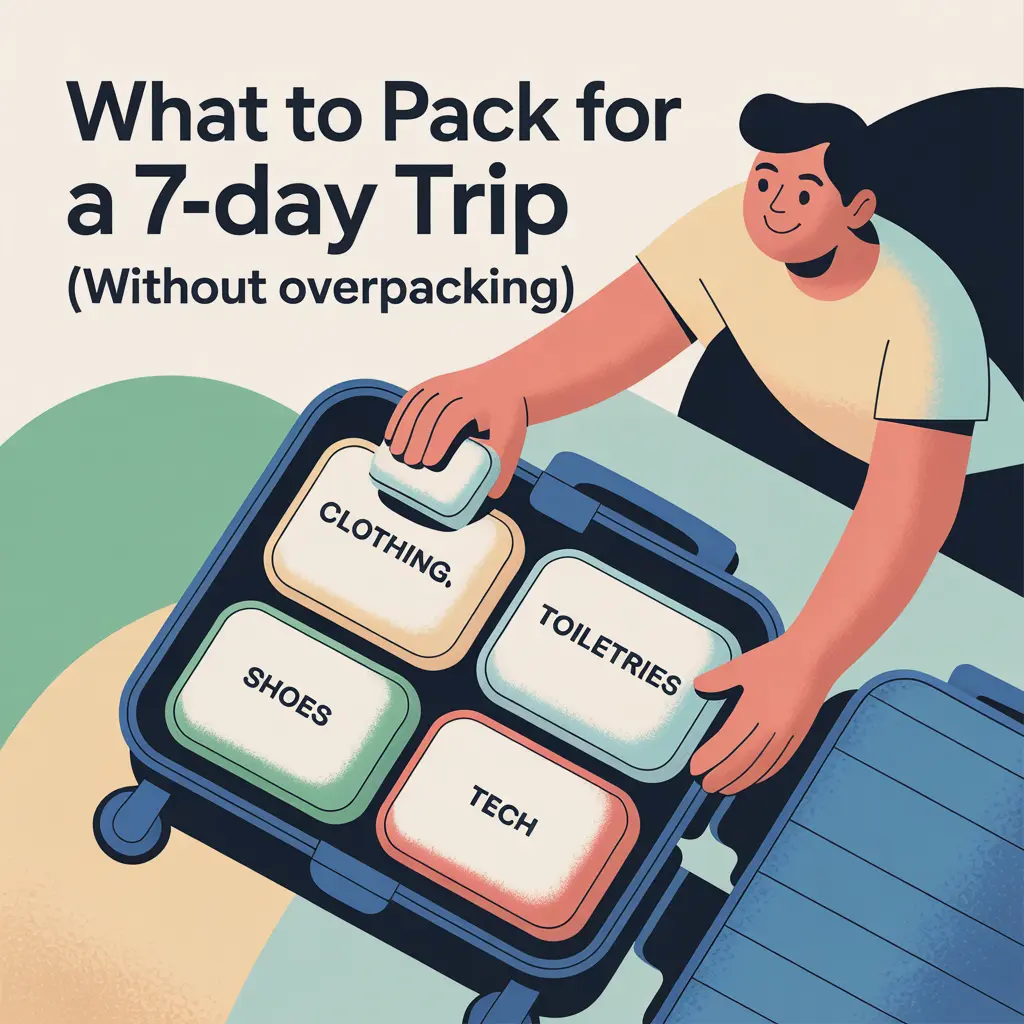
Packing cubes strategy
Assign one cube per category (tops, bottoms, underwear/socks). Commit to filling only those cubes, no overflow. If it doesn’t fit, it doesn’t come.
Rolling vs folding
Rolling saves space and reduces wrinkles. It’s the go-to method for frequent travelers who fit a full week in a carry-on.
Wearing layers in transit
Jackets, sweaters, and bulkier shoes belong on your body during travel, not in your bag.
Mindset Shifts
Cutting “what if” items
Most overpacked items are driven by unlikely scenarios. Leave them behind. If you truly need something, you can usually buy it at your destination.
Limiting shoes, accessories, tech
These add weight fast and expand slowly in usefulness. Cut here first for the biggest space wins.
Buying locally if needed
Sunscreen, toiletries, or a missing layer can be bought anywhere. Packing lighter gives you permission to adapt instead of overprepare.
Example 7-Day Packing List (Carry-On Only)
Use this as a scannable, printable checklist you can adapt to most trips.
Category | Suggested Items | Notes / Sources |
Tops | 4–5 casual tops + 1–2 dressy tops | Mix-and-match neutrals |
Bottoms | 2–3 total (jeans/pants + shorts/skirt) | Fewer bottoms, more tops |
Dresses / Rompers | 1 versatile piece | Optional but space-efficient |
Outerwear | 1 light jacket or sweater | Wear in transit if bulky |
Sleepwear | 1 set | Doubles as lounge wear |
Underwear | 7 pairs + 2 bras | Pack exactly what you need |
Socks | 2–3 quick-dry pairs | Re-wear after airing |
Swimwear | 1–2 swimsuits + cover-up | Climate dependent |
Shoes | 2–3 pairs max | Walkers, dressy, optional flip-flops |
Toiletries | Travel-size basics only | Skip backups |
Tech | Phone, charger, adapter, power bank | Laptop/tablet only if used |
Documents & Essentials | Passport/ID, wallet, meds, water bottle | Always in personal item |
Pack Less, Travel Better
Packing lighter isn’t about deprivation, it’s about freedom. Fewer items mean faster airports, easier movement, and less mental clutter on the road. When you trust a simple system and commit to carry-on only, travel becomes smoother and more enjoyable.
You don’t need more space, you need better decisions. And once you’ve packed light successfully once, you’ll never want to go back.

Leave a comment
Your email address will not be published. Required fields are marked *