
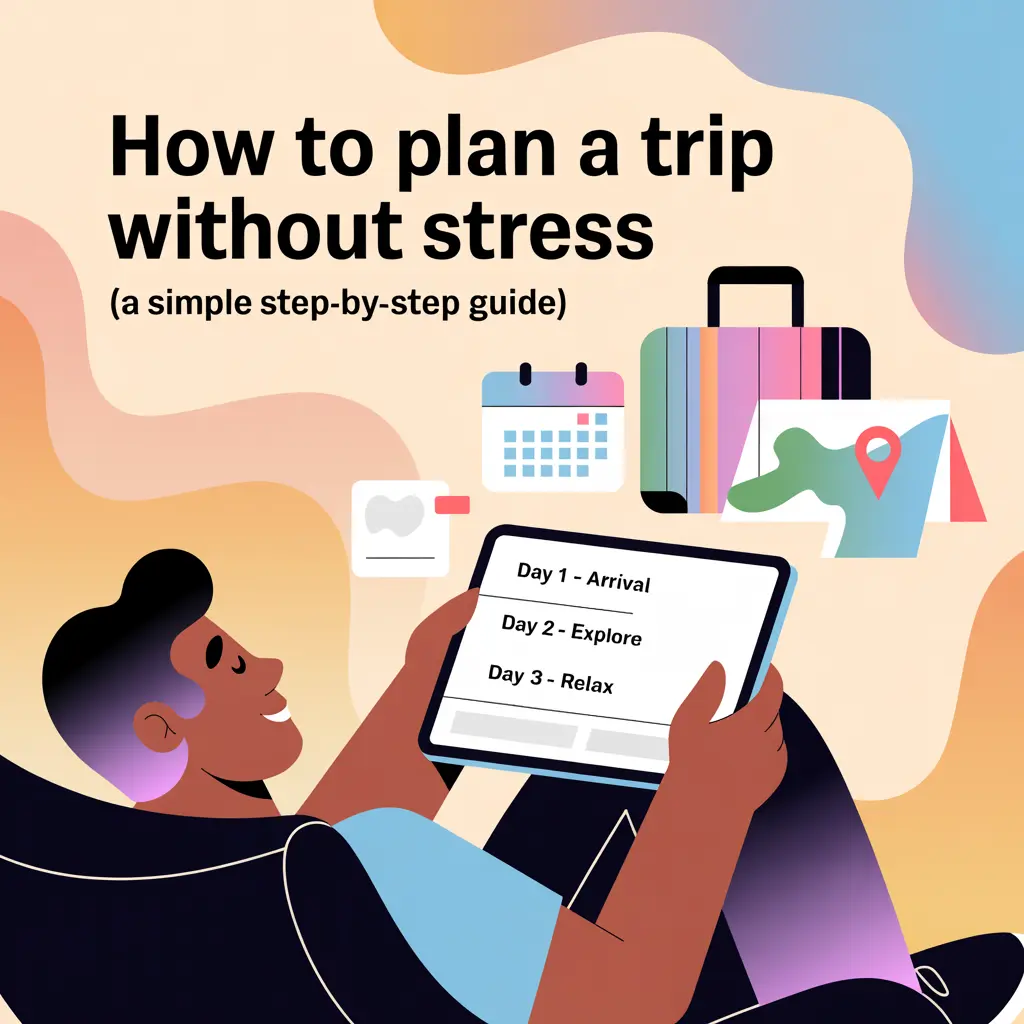
Trip planning should feel exciting, but for many people, it quickly turns into a mental mess. Too many tabs open. Too many opinions. Too many decisions stacked on top of each other. Flights, hotels, budgets, packing, timing… it all starts to feel heavy before the trip even begins.
Here’s the truth most guides don’t say out loud: travel planning stress isn’t a personal failure . It’s not because you’re bad at planning or “not organized enough.” It happens because everything feels urgent all at once, and your brain wasn’t built for that.
The solution isn’t planning harder. It’s planning simpler .
This guide walks you through a clear, flexible, step-by-step system that breaks travel planning into manageable decisions you can spread over time. No perfection required. No over-research. No rigid itineraries that collapse the moment something changes.
The goal here is clarity, not control. You’ll finish with a plan that supports your trip instead of stressing you out, and leaves room for real enjoyment.
Step 1: Set Your Budget, Dates, and Travel Style
Before you look at flights, hotels, or Instagram reels, you need boundaries. These three decisions, budget, dates, and travel style, act like guardrails. Once they’re set, everything else gets easier.
Define Your Budget Boundaries
You don’t need an exact dollar figure down to the cent. You just need a comfortable range that keeps decisions grounded instead of emotional.
Most travelers break budgets into a few simple categories:
- Transportation (flights, trains, car rentals)
- Accommodation
- Food and drinks
- Activities and experiences
- Travel insurance
- A small emergency cushion
That last one matters more than people realize. An emergency buffer reduces anxiety because you’re no longer planning on things going perfectly. Delays, price changes, or last-minute adjustments stop feeling like crises and start feeling manageable.
A realistic budget doesn’t limit your trip, it gives you peace of mind.
Choose Dates and Trip Length Early
How long you travel affects everything: flight prices, accommodation costs, how rushed you feel, and how much you can realistically see.
As a general rule:
- 4–7 days works well for city breaks or nearby destinations
- 7–10 days allows for slower pacing or a mix of cities
- 10–14 days is better for long-haul travel or multi-city trips
Shorter trips often mean higher daily costs but less fatigue. Longer trips give you breathing room but require more planning and recovery time.
Locking in trip length early prevents overpacking itineraries and helps you avoid that common mistake of trying to squeeze a two-week experience into five days.
Decide Your Travel Style
This step is often skipped, and that’s why people end up exhausted on vacation.
Ask yourself honestly:
- Do you prefer slow days or packed schedules?
- Are you more drawn to cities, nature, or a mix ?
- Do you want structure, or freedom to wander?
A slow-paced traveler will feel stressed on a fast itinerary, no matter how “efficient” it looks on paper. A city-lover won’t suddenly enjoy long rural drives just because they were recommended online.
Choosing your travel style early simplifies every future decision:
- Where you stay
- How many activities you plan
- How much downtime you protect
When your trip matches how you actually enjoy traveling, stress drops automatically, and planning stops feeling like a chore.
Step 2: Choose a Destination and Timing Smartly
Once your budget, dates, and travel style are clear, choosing where and when to go becomes far less stressful. The mistake most people make is browsing destinations too early, before they’ve set limits, then trying to force a trip to fit options that don’t really work.
This step is about alignment, not aspiration.
Match Destination to Budget and Time
Stress often comes from having too many choices, not too few. Narrowing your options is what creates relief.
Instead of asking, “Where do I want to go?” try asking:
- Where fits my budget without constant compromise?
- Where fits my available time without rushing?
A destination that requires long flights, frequent transfers, or expensive accommodation may look amazing, but if it strains your time or finances, it will quietly add pressure throughout the trip.
Also remember: there is no universal “best destination.” The best place is the one that works for you right now . A city that’s perfect for a two-week trip might be frustrating for a five-day escape. A destination that shines on a luxury budget may feel restrictive on a tighter one.
Choosing a destination that fits your reality, not an idealized version of travel, is one of the fastest ways to reduce planning stress.
Pick the Right Season
Timing matters just as much as location.
Most destinations fall into three broad travel periods:
- Peak season: best weather, highest prices, biggest crowds
- Shoulder season: decent weather, fewer crowds, better value
- Off-season: lowest prices, but possible weather or access tradeoffs
For low-stress travel, shoulder seasons often win. Prices are calmer, popular sights are more enjoyable, and accommodation availability is better, meaning fewer compromises and less urgency when booking.
Comfort matters too. Heat, cold, rain, or humidity can turn even a well-planned trip into an exhausting one if it doesn’t match your tolerance. Choosing a season that suits how you like to travel makes the entire experience smoother.
Check the Basics Before Committing
Before locking in a destination, do a quick reality check. This isn’t deep research, just enough to avoid surprises.
At minimum, confirm:
- Weather during your travel dates
- Visa and entry requirements, including passport validity rules
- Safety considerations, such as travel advisories or common scams
- Major events like festivals, strikes, or conferences that could affect prices and availability
Catching these details early prevents last-minute changes that cause stress and disappointment later.
Step 3: Do Focused Destination Research (Not a Rabbit Hole)
Good research reduces stress. Too much research creates it.
The goal here isn’t to learn everything, it’s to learn just enough to make confident decisions.
Start With the Big Questions
Instead of scrolling endlessly, focus on a few core questions:
- Where should I stay? (Which neighborhoods fit my style and budget?)
- How will I get around? (Walking, public transit, rideshares, rental car?)
- Which areas feel safe and convenient? (Especially at night or for early mornings)
Answering these questions covers most of what actually affects your day-to-day experience.
Use Maps First
Maps are one of the most underrated planning tools, and one of the fastest ways to reduce overwhelm.
Before booking anything:
- Look at neighborhood layouts
- Check distances between attractions
- Identify transit lines and hubs
This helps you avoid common stress points, like booking a “great deal” that’s far from everything, or underestimating daily travel time between places.
A quick map check often reveals more than pages of written reviews.
Limit Your Sources
Opening 20 tabs doesn’t make you better prepared, it just creates conflicting advice.
Fewer, better sources lead to clearer decisions and less second-guessing.
A simple rule:
- 1 official tourism or transport site
- 1–2 detailed travel blogs
- Optional: 1 YouTube walkthrough for visual context
That’s it.
By limiting your sources, you protect yourself from information overload and keep planning focused, calm, and intentional, exactly what stress-free travel planning is supposed to feel like.
Step 4: Build a Simple, Flexible Itinerary
This is where many trips quietly fall apart, not because of poor planning, but because of too much planning. A stress-free itinerary isn’t packed; it’s intentional .
Think of your itinerary as a guide, not a contract.
Plan Light on Purpose
Overplanning creates stress because it removes margin. Every delay, mood change, or unexpected discovery starts to feel like a problem instead of part of the experience.
When days are packed:
- You’re always watching the clock
- Small delays cascade into bigger frustrations
- Rest starts to feel “unproductive”
Breathing room changes everything. It gives you time to linger, recover, or pivot without guilt. It also makes the trip feel more relaxed, even when things don’t go exactly as planned.
A lighter plan doesn’t mean doing less. It means enjoying more of what you do choose.
Choose 1–2 Anchor Activities Per Day
A simple rule that works almost everywhere: plan one or two main activities per day, no more .
Anchor activities are the things you genuinely care about: a museum, a tour, a hike, a show, a food experience. Once those are set, everything else becomes optional.
To keep days smooth:
- Group activities by location or neighborhood
- Avoid bouncing across the city multiple times a day
- Leave space before and after anchors
Optional extras, cafés, parks, markets, wandering, can fill gaps if you have the time and energy. If not, you skip them without stress, because they were never commitments in the first place.
Lock in Non-Negotiables First
Some things truly do need to be planned in advance. These should go on your calendar first.
Non-negotiables usually include:
- Reservations with fixed times
- Popular attractions with limited tickets
- Day trips or tours that sell out
Once these are placed, you can build loosely around them. Everything else stays flexible by design. This approach protects the highlights of your trip while keeping your schedule adaptable.
Step 5: Book Transport and Accommodation in the Right Order
Booking in the wrong order creates unnecessary pressure. Booking in the right order simplifies decisions and reduces last-minute scrambling.
Book Transport First
Flights, long-distance trains, or major bus routes set the framework of your trip. Dates, arrival times, and departure cities all influence where you stay and how you move.
Securing transport early:
- Locks in realistic dates
- Prevents price spikes
- Removes uncertainty from the biggest expense
Once transport is booked, the rest of the planning becomes more concrete, and far less stressful.
Choose Accommodation Strategically
The cheapest option isn’t always the best one.
When choosing where to stay, prioritize:
- Location over luxury
- Easy access to transit or walkable areas
- Proximity to your main activities
A slightly higher nightly cost often saves you time, energy, and daily frustration. Convenience reduces decision fatigue, shortens travel days, and makes it easier to rest, especially after long or busy days.
Accommodation should support your itinerary, not complicate it.
Secure Time-Sensitive Extras
With transport and accommodation in place, book the essentials that can’t be left to chance:
- Airport or station transfers
- Rental cars (especially in peak periods)
- Must-book attractions or experiences
Locking these in early removes lingering mental to-do lists. Once the essentials are handled, you can stop planning constantly and start looking forward to the trip.
That’s the real signal you’re doing it right: planning fades into confidence .
Step 6: Use Checklists to Stay Organized (and Calm)
Stress thrives on loose ends. Checklists eliminate them.
You don’t need complex tools or apps, just a simple system that keeps everything out of your head and in one reliable place.
Create a Planning Checklist
A planning checklist covers everything that must be handled before you leave.
At a minimum, include:
- Documents: passport, visa (if required), ID, travel insurance details
- Bookings: flight confirmations, accommodation addresses, transport tickets, tour reservations
- Home preparation: mail holds, pet care, plant watering, security checks, appliance shutdowns
Seeing these items checked off does more than organize you, it reassures you that nothing critical is being forgotten.
Create a Packing Checklist
Packing stress usually comes from last-minute uncertainty. A checklist turns packing into a mechanical process instead of an emotional one.
Break it into simple categories:
- Clothing: weather-appropriate outfits, sleepwear, comfortable shoes
- Toiletries: basics, medications, travel-size liquids
- Tech and essentials: phone, chargers, adapters, headphones, important documents
Once the list exists, packing becomes repeatable and calm, especially useful if you travel more than once a year.
Keep Everything in One Place
Scattered information creates low-level anxiety. Centralized information creates calm.
Choose one system:
- Digital folders (cloud storage, notes apps, email folders)
- Printed backups for key documents like passports and insurance
For digital storage, make sure critical details are accessible offline: addresses, maps, confirmation numbers, and emergency contacts. That way, even if Wi-Fi fails, your trip doesn’t.
Step 7: Plan for Health, Money, and “What Ifs”
Planning for potential issues isn’t pessimistic, it’s practical. When basics are covered, your mind relaxes because it knows you’re prepared.
Health Preparation
Health planning is simple but powerful.
Consider:
- Travel insurance for medical care, cancellations, and delays
- Medications and vaccines required or recommended for your destination
- Basic first-aid supplies tailored to your trip and activities
Knowing you can handle minor issues, and are protected against bigger ones, removes a huge layer of background stress.
Money Preparation
Money worries are one of the biggest travel stressors, but they’re also the easiest to prevent.
Before you go:
- Carry a mix of cards and cash
- Notify your bank if traveling internationally
- Understand foreign transaction fees and local ATM access
This ensures you’re never scrambling to pay or worrying about being cut off from funds.
Reduce Mental Load Before You Go
Preparedness isn’t about control, it’s about freedom.
When health, money, and logistics are handled in advance:
- You stop mentally rehearsing problems
- You trust your plan
- You arrive calmer and more present
That peace of mind carries into the trip itself. And that’s the real payoff of stress-free planning.
Step 8: Pack Early and Light
Packing is one of the biggest stress triggers before a trip, but only when it’s rushed. Done early and intentionally, it becomes one of the calmest parts of the process.
Start Packing a Few Days Ahead
Packing days in advance removes urgency. You’re no longer reacting, you’re choosing.
Starting early gives you:
- Time to avoid last-minute stress
- Space to notice what you don’t actually need
- A chance to wash, replace, or rethink items without panic
Instead of throwing things into a bag the night before, you’re making deliberate decisions. That alone lowers anxiety.
Pack Less Than You Think
Most people overpack out of fear, not necessity.
A simple rule that works almost every time: lay everything out, then remove a few items . If you hesitate to remove something, ask whether you’ll realistically use it, not whether it might be useful.
Packing lighter means:
- Easier movement
- Less time managing luggage
- Fewer fees and fewer worries
It also leaves space, for souvenirs, local purchases, and flexibility if plans change.
Protect Your Essentials
Your carry-on is your safety net.
Always keep essentials with you:
- Travel documents and valuables
- Medications and basic toiletries
- Chargers, headphones, and a change of clothes
If luggage is delayed or lost, these items allow you to stay calm and functional. Planning for this possibility doesn’t create stress, it prevents it.
Step 9: Manage Travel-Day and In-Trip Stress
Even with solid planning, travel days can be unpredictable. The goal isn’t to eliminate stress completely, it’s to keep it from taking over.
Accept That Plans Will Change
The biggest mental shift is letting go of rigid control.
Treat your itinerary as guidance, not a strict schedule. Delays, closures, and spontaneous changes are normal parts of travel, not failures.
When plans shift, you adapt instead of panic. That mindset alone makes the entire trip feel lighter.
Simple Stress-Reduction Techniques
When stress spikes, small actions make a big difference:
- Slow, deep breathing to reset your nervous system
- Music, podcasts, or light reading to create mental distance
- Short pauses to ground yourself before moving on
These techniques don’t require special tools, just awareness and permission to slow down.
Build Buffers Into Travel Days
Rushing is one of the fastest ways to turn minor issues into major stress.
Reduce pressure by:
- Arriving early at airports or stations
- Carrying snacks and water
- Scheduling downtime between connections or activities
Buffers give you options. And options are the opposite of stress.
When you plan for calm, calm becomes the default.
Step 10: Leave Space for Spontaneity
After all the planning, this final step is about letting go . Ironically, this is what makes the entire system work.
Let Go of the “See Everything” Mentality
Trying to see everything is one of the fastest ways to feel disappointed, even on a great trip.
Skipping things is not failure. It’s a sign that you’re:
- Listening to your energy
- Choosing quality over quantity
- Allowing the trip to unfold naturally
When you reframe missed plans as freedom , pressure disappears. You stop chasing checklists and start experiencing moments, long meals, unexpected walks, conversations that weren’t scheduled.
Those are often what people remember most.
Stay Flexible With Companions
Group travel adds another layer of stress when everyone tries to do everything together.
A calmer approach:
- Agree on shared priorities ahead of time
- Accept that not every activity has to be a group decision
Allowing individual choices, splitting up occasionally, resting while others explore, reduces friction and resentment. Everyone gets something they want, without forcing compromise at every turn.
Flexibility keeps relationships intact and the trip enjoyable.
Embrace the Unexpected
Delays, closures, weather changes, wrong turns, these will happen.
Instead of treating them as disruptions, treat them as invitations:
- To discover a different neighborhood
- To try a café you wouldn’t have planned
- To slow down when you didn’t know you needed it
Many of the best travel stories start with something not going according to plan. When you expect the unexpected, it stops feeling like a problem.
A Stress-Free Trip Is About Structure, Not Perfection
Stress-free travel doesn’t come from flawless planning. It comes from clear structure, realistic expectations, and room to adapt.
By breaking planning into simple steps, setting boundaries early, and leaving space for flexibility, you replace overwhelm with confidence. You stop reacting, and start enjoying the process.
You don’t need to be an expert traveler. You don’t need perfect timing, perfect weather, or perfect plans.
You’re already capable of planning a great trip.
This guide just helps you do it without the stress .

Leave a comment
Your email address will not be published. Required fields are marked *