
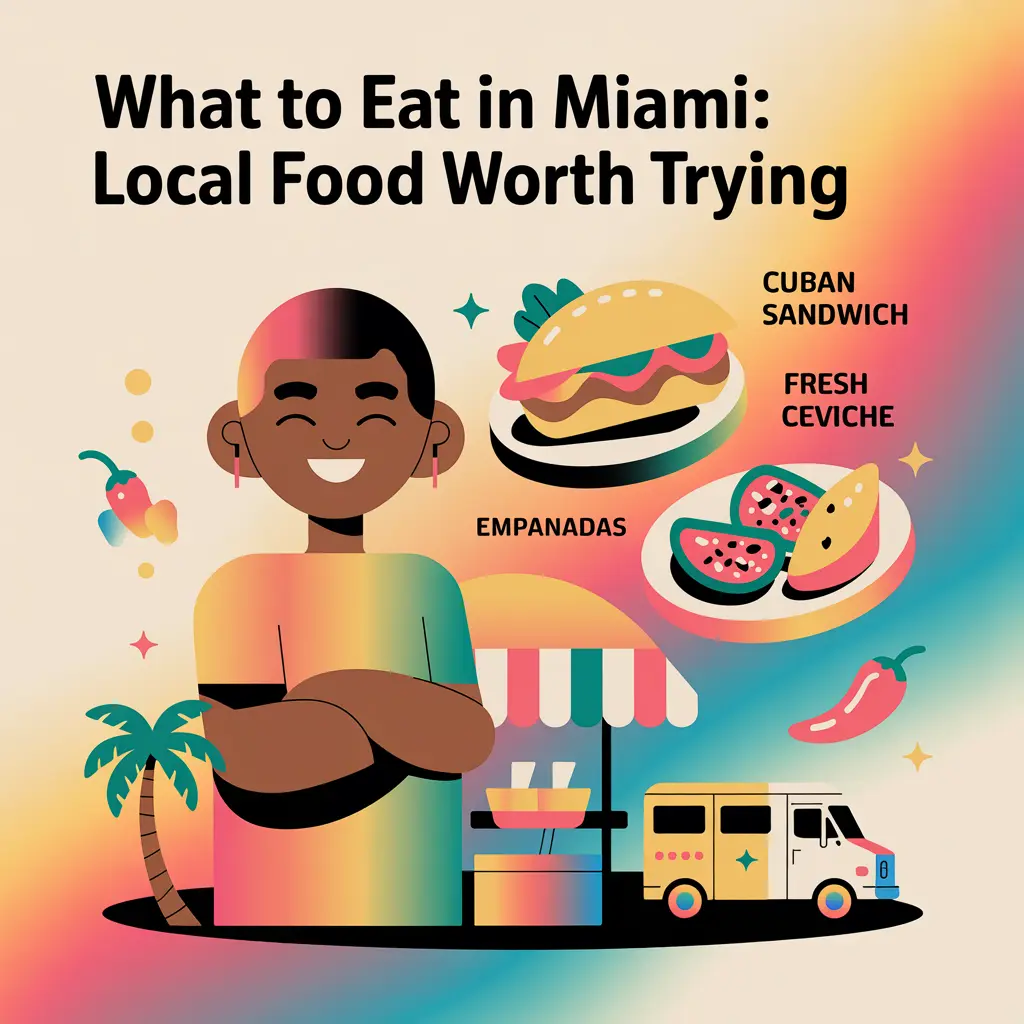
Why Miami Is One of America’s Most Flavorful Cities
Miami isn’t just beaches and nightlife , it’s a collision of Cuba, Haiti, Puerto Rico, Jamaica, and coastal Florida, all layered onto one electric stretch of coastline. The city’s flavor isn’t subtle. It’s citrus and smoke. Garlic and pork fat. Sweet plantains and espresso strong enough to reset your heartbeat.
Few American cities wear their immigrant history so proudly on the plate. Cuban ventanitas serve croquetas before 9 a.m. Haitian fritay spots perfume entire blocks with fried pork and pikliz. Puerto Rican kitchens mash plantains into garlicky comfort. Jamaican grills send out jerk smoke that lingers in the air long after sunset. And just offshore? Stone crabs and snapper that remind you Miami is, at its core, a coastal city.
This guide breaks down the must-try local dishes, what they taste like, and where to find them , from casual sandwich counters to historic seafood institutions.
If you want to eat like a local in Miami, start here.
Iconic Miami Foods You Absolutely Have to Try
These are the dishes that define Miami. The foods locals crave, argue about, and recommend to out-of-towners. If you only eat a handful of things in the city, make it these.
Cuban Sandwich (The Most Famous Miami Bite)
The Cuban sandwich is Miami’s edible calling card.
What It Is
Pressed Cuban bread stuffed with roast pork, ham, Swiss cheese, pickles, and mustard , sometimes with salami depending on regional style. It’s brushed with fat and pressed until the outside shatters and the inside melts.
What It Tastes Like
Savory roast pork. Salty ham. Gooey Swiss. Sharp mustard and pickles cutting through the richness. And that bread? Crackly, golden, aggressively crunchy.
Why It’s Iconic
Cuban immigration shaped modern Miami. The sandwich became the portable, affordable expression of that history , easy to grab, easy to love.
When to Eat It
- Quick lunch between neighborhoods
- Beach-day fuel
- Late-night bite after drinks
Where to Try It
- Enriqueta’s Sandwich Shop – No-frills, deeply local.
- Louie’s at Palm House – Heavy on juicy roast pork, pressed extra crisp.
- Three Palms Cuban Cafe – Big, cheesy, classic.
- Cubatón Sandwich Shop – Handcrafted Cubanos in the heart of the action.
Frita (Miami’s Cuban Burger)
The frita looks like a burger. It doesn’t taste like one.
What Makes It Different
Unlike a standard American burger, the frita blends ground beef with chorizo, bringing smoky spice into every bite. It’s topped with crispy shoestring potatoes and a tangy tomato-based sauce, then served on a soft Cuban roll.
Flavor Profile
Smoky. Slightly spicy. Sweet-tangy sauce. Crunch from the potatoes. It’s messy in the best way.
Why It’s Street Food Royalty
It’s bold, affordable, and built for standing up. The frita belongs to food trucks, corner counters, and late-night windows.
Best For
- Late-night eats
- Casual lunch
- Post-beach hunger
Croquetas, Pastelitos & Empanadas (All-Day Miami Snacks)
Miami runs on bakeries and ventanitas , those walk-up café windows where locals order espresso and pastries without ever stepping inside.
These snacks aren’t occasional treats. They’re daily rituals.
Croquetas
Golden-fried logs of béchamel stuffed with ham or chicken.
Crunchy outside. Creamy inside. Smoky, salty comfort in two bites.
Pastelitos
Buttery, flaky pastry filled with guava , sometimes paired with cream cheese. Sweet, slightly tart, and dangerously easy to eat.
Empanadas
Dough pockets stuffed with beef, chicken, cheese, vegetables , baked or fried. Some spots even lean sweet (Nutella, banana).
Where to Try Them
- Gogo Fresh – Known for creative baked empanadas.
- Mario’s Cuban Cuisine – Classic Cuban snacks done right.
Stone Crab Claws (Miami’s Seasonal Luxury)
If Cuban food is Miami’s soul, stone crab is its seasonal splurge.
What They Are
Large crab claws served chilled and pre-cracked, typically alongside a mustard dipping sauce.
Season
Usually October through May , always check dates before planning.
Flavor & Texture
Sweet, firm, delicate meat. Served cold. Brightened by tangy mustard sauce.
Why They’re Tradition
Stone crab fishing is uniquely tied to South Florida. Eating them feels ceremonial , part seafood feast, part Miami rite of passage.
Historic Spot
- Joe’s Stone Crab – Serving since 1913. A Miami institution.
Key Lime Pie (Florida’s Signature Dessert)
No trip to Miami ends without Key lime pie.
What It’s Made Of
Sweetened condensed milk, egg yolks, and Key lime juice in a graham cracker crust. Usually topped with whipped cream or meringue.
Origin
Rooted in the Florida Keys in the 19th century, where cooks used local Key limes and pantry staples to create something iconic.
What It Tastes Like
Creamy. Bright. Tart without being overwhelming. Light enough to finish after a heavy seafood dinner.
When to Order
After stone crab. After snapper. After anything fried.
Puerto Rican & Caribbean Favorites: Mofongo and Jerk
Miami’s Caribbean influence stretches far beyond Cuba.
Mofongo
A Puerto Rican dish made from fried green plantains mashed with garlic and often chicharrón. Shaped into a mound, sometimes filled or topped with meat or seafood.
Savory. Garlicky. Dense. Deeply comforting.
Jerk Chicken
Marinated in allspice, Scotch bonnet peppers, and herbs. Grilled until smoky and charred.
Spicy heat. Sweet undertones. Lingering smoke.
To taste the real diversity of Miami, explore beyond South Beach. Seek out local Caribbean restaurants and neighborhood food trucks.
Haitian Fritay & Griot (Little Haiti Essentials)
Head to Little Haiti and you’ll discover one of Miami’s most vibrant food cultures.
What Is Fritay?
Haitian street-food platters , fried meats, plantains, and bold sides meant to be eaten casually and joyfully.
Griot
Citrus-marinated pork fried until crisp outside and tender inside.
Pikliz
A fiery pickled cabbage relish with vinegar and peppers that cuts through the richness.
Where to Go
- Piman Bouk Restaurant – Known for authentic griot and fried goat.
- Fritay Lakay – Classic Haitian fritay plates.
Classic Cuban Home-Style Plates (Full Meals, Not Just Sandwiches)
To really understand Miami, sit down for a full Cuban meal.
Rice. Beans. Sweet plantains. Slow-cooked meats. No rush.
Ropa Vieja
Shredded beef stewed in tomato sauce with peppers and onions. Rich, savory, deeply comforting.
Lechón Asado
Garlic- and citrus-marinated roast pork. Crispy edges. Juicy interior.
Bistec de Palomilla
Thin steak pan-fried and topped with onions. Simple. Classic.
Arroz con Pollo
Chicken and yellow rice cooked together , hearty, fragrant, nostalgic.
Where to Try
- Padrino’s Cuban Restaurant – Known for lechón asado and traditional plates.
Cafecito (Because Coffee Is Culture Here)
Cafecito isn’t just coffee. It’s punctuation.
What It Is
A small, strong espresso sweetened during brewing, topped with thick foam (espuma).
What It Tastes Like
Very strong. Very sweet. Intense and addictive.
Ventanita Culture
Locals gather at walk-up windows, order in Spanish, and share tiny cups with friends and coworkers.
When Locals Drink It
Morning wake-up. Mid-afternoon slump. After meals.
The Social Ritual
One person orders. Tiny cups get passed around. Conversations spark. It’s less about caffeine , more about connection.
Where to Eat in Miami by Neighborhood
Miami isn’t one food scene. It’s multiple micro-worlds stitched together by highways, murals, and palm trees. If you want to eat smart, start with the right neighborhood.
Little Havana
The cultural heartbeat of Cuban Miami.
Best known for:
- Cuban sandwiches
- Ropa vieja and lechón asado
- Croquetas and pastelitos
- Cafecito at ventanitas
Walk down Calle Ocho and you’ll hear domino tiles snap and espresso machines hiss. This is where you go for old-school Cuban plates, bakery snacks, and coffee shared in tiny cups on the sidewalk.
Little Haiti
Bold, vibrant, and deeply local.
Best known for:
- Griot (fried pork)
- Haitian fritay platters
- Pikliz and fried plantains
- Tassot (fried goat)
Little Haiti is less polished, more authentic. The food is fiery, citrus-heavy, and unapologetically rich. If you want to taste a side of Miami that many visitors miss, this is it.
Wynwood
Art walls. Breweries. Creative kitchens.
Best known for:
- Elevated Cuban sandwiches
- Modern Latin fusion
- Craft cocktails and brunch spots
- Casual but stylish bites
Wynwood blends street art with experimental menus. It’s where traditional flavors get remixed , think fritas with chef-level upgrades and Caribbean ingredients folded into contemporary plates.
Miami Beach
Seafood and late-night energy.
Best known for:
- Stone crab claws (in season)
- Key lime pie
- Upscale coastal dining
- Trendy brunch and rooftop restaurants
Miami Beach leans polished and photogenic. You’ll find historic seafood institutions and modern restaurants with ocean views , perfect for a splurge meal.
Downtown / Brickell
Modern, fast-paced, international.
Best known for:
- High-end Latin restaurants
- Caribbean-inspired fine dining
- Business-lunch Cuban plates
- After-work cocktail spots
Brickell moves quickly. Expect sleek dining rooms, strong espresso, and a mix of traditional Latin flavors presented with a contemporary edge.
What First-Time Visitors Should Order (If You Only Have 2–3 Days)
If your time is short, don’t overthink it. Eat this:
Must-Try Sandwich: Cuban sandwich , pressed, crispy, heavy on roast pork.
Seafood Dish: Stone crab claws (October–May) with mustard sauce.
Caribbean Dish: Mofongo or Haitian griot with pikliz for something bold and unforgettable.
Dessert: Key lime pie , creamy, tart, bright.
Coffee Stop: Cafecito from a ventanita in Little Havana.
That lineup alone tells the story of Miami.
When to Visit for Seasonal Dishes
Stone Crab Season
Stone crab claws are typically available October through May. If they’re on your list, plan accordingly. Outside that window, you won’t find the real thing.
Outdoor Dining Culture
Miami is built for eating outside. Winter and early spring bring cooler breezes and packed patios. Even summer , humid and intense , feels alive at night with outdoor tables full and music drifting through the air.
Food Festivals
Throughout the year, Miami hosts food and wine festivals, Caribbean celebrations, and neighborhood cultural events where local chefs showcase traditional dishes. If you’re flexible with travel dates, pairing your trip with a food festival can deepen the experience.
Final Thoughts: Miami Is More Than Just Cuban Food
Yes, Cuban food defines the city. But it doesn’t limit it.
Miami is Haitian griot crackling in hot oil. It’s jerk smoke rising from grills. It’s plantains mashed with garlic and pork fat. It’s stone crab cracked open over crushed ice. It’s guava and cheese melting inside flaky pastry.
To truly taste Miami, move beyond the obvious. Step outside the most tourist-heavy blocks. Follow the music, the smoke, the lines of locals waiting at small windows.
Because Miami doesn’t whisper its flavors.
It hits you with citrus, heat, salt air, and spice, all at once, under a sky that smells faintly of the ocean.

Leave a comment
Your email address will not be published. Required fields are marked *